
Staying Active With a Busy Job and Kids
Practical strategies for staying active when you have a demanding job and young children, focusing on short workouts, planning and consistency over perfection.
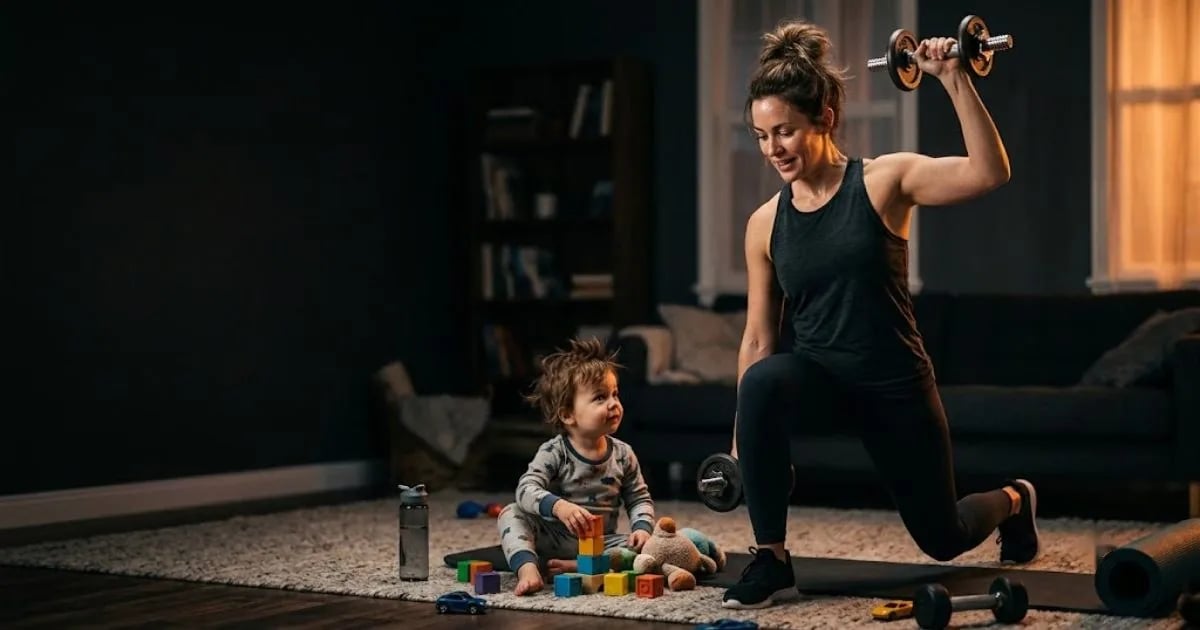
Staying active with a busy job and kids can feel almost impossible. Between long working hours, school runs, meals, bedtimes and the endless small tasks of family life, your own fitness is usually the first thing to get dropped. I hear this constantly from the parents I coach, and I want to say clearly: it is not that you lack discipline. Your life is genuinely full. The answer is not to find more hours, it is to train in a way that fits the hours you have.
Over the years I have helped many busy parents and professionals stay fit without upending their lives. It comes down to a shift in mindset and a few practical strategies. Let me share exactly how to make fitness work when your time is not your own.
Why staying active with work and kids feels so hard
The core problem is not motivation, it is time and energy. When your day is packed and your evenings belong to your family, the traditional idea of fitness, an hour at the gym several times a week, simply does not fit. Many parents conclude that if they cannot do it properly, there is no point doing it at all. That all-or-nothing thinking is the real enemy. A short, imperfect workout done consistently beats a perfect plan you never start.
Once you let go of the idea that exercise has to be long and pristine to count, a whole world of realistic options opens up. Small, regular efforts add up to real results over time.
Short workouts really do work
Here is the good news that changes everything for busy people: you do not need long sessions to get fit and strong. Short, focused workouts of twenty to thirty minutes, done consistently, deliver excellent results. The efficiency comes from how you use the time, not how much of it you spend.
- Focus on big movements: squats, hinges, pushes, pulls and carries train the whole body fast.
- Use circuits: moving from one exercise to the next with little rest saves time and keeps intensity up.
- Train full-body: a few full-body sessions a week are more time-efficient than long split routines.
A twenty-minute full-body circuit two or three times a week is enough to build strength and change how you feel. That is a realistic commitment even in a packed week, and it is exactly the kind of efficient plan I build for the parents I coach. You can see how I work if you want a routine designed around your real schedule.
Train at home to save time
For busy parents, the time spent travelling to and from a gym is often the biggest barrier of all. Training at home removes it entirely. A small space and minimal equipment are enough for effective workouts, and you can fit them around nap times, before the house wakes up, or after the kids are in bed. I have written a full guide to functional training at home that gives you a ready-made routine to start with.
Home training also makes it easier to seize small windows of time. You do not need to change, commute and psych yourself up. When you have twenty free minutes, you simply start.
Plan your workouts like appointments
The single most effective habit for busy parents is to schedule exercise the way you schedule everything else. If it stays a vague intention for "sometime today", it gets squeezed out. If it has a time slot, it happens.
How to plan realistically
- Pick specific windows: early morning, a lunch break, or after bedtime, whatever is most reliable for you.
- Keep it in your calendar: treat it as a real appointment, not an optional extra.
- Prepare in advance: lay out clothes and keep equipment visible so there is no friction.
- Have a backup plan: a shorter session for the days that fall apart, so something always gets done.
Planning turns fitness from a battle of willpower into a simple routine, and routines are what survive a chaotic week.
Build activity into family life
Not all of your activity has to be a formal workout. When your day is full, weaving movement into family life keeps you active without needing extra time.
- Move with your kids: play actively, walk, cycle or go to the park together.
- Choose the active option: take the stairs, walk short journeys, carry the shopping.
- Involve the family: a weekend walk or bike ride is exercise and time together at once.
These small choices add up and set a wonderful example for your children at the same time. Fitness stops being something you steal from your family and becomes something you share with them.
Protecting your energy, not just your time
Time is only half the challenge for busy parents. Energy is the other half. You can carve out twenty minutes and still feel too drained to use them well. That is why staying active is not only about scheduling, it is about protecting the basics that give you energy in the first place.
Sleep is the foundation, even when it is broken by young children, so protect what sleep you can and go to bed a little earlier when the day allows. Eat in a way that fuels you rather than leaving you sluggish, with enough protein and real food across the day. And notice that exercise itself, done sensibly, gives energy back rather than taking it. A short workout often leaves you more alert and less stressed than the rest you skipped it for. Movement is not another drain on your reserves, it is one of the things that refills them.
Letting go of guilt
Many parents, and especially many mothers, carry guilt about taking time for themselves. It can feel selfish to spend twenty minutes exercising when there is always something to do for everyone else. I want to gently push back on that. Looking after your own health is not taking away from your family, it is investing in your ability to show up for them with more energy, patience and strength.
A parent who is fit, energetic and less stressed is better able to keep up with their kids and enjoy them. You are also modelling something powerful: that taking care of your body is normal and worthwhile. Reframing your workouts as part of caring for your family, not competing with it, takes the guilt out of the equation and makes it far easier to stay consistent.
Consistency beats intensity
If you take one message from this, let it be this: consistency matters far more than intensity when life is busy. Three short workouts a week, every week, will transform your fitness over a few months. Two brutal sessions followed by three weeks off will not. The goal is a sustainable rhythm you can hold through the ordinary chaos of family life.
Be kind to yourself on the hard weeks. A missed session is not failure, it is just a normal part of a full life. What matters is that you come back to it. The parents who stay fit are not the ones with the most free time, they are the ones who found a realistic rhythm and stuck with it. You can be one of them, and it starts with a single short workout today.
The best results come from a plan built around your life - your goals, your schedule and where you are starting from. I coach women and men in Düsseldorf and online, and I help them build habits that last. If you want a plan made specifically for you, see how I work and get in touch.
FAQ
- How can I stay fit with a busy job and young kids?
- Focus on short, efficient workouts of twenty to thirty minutes done consistently, train at home to remove travel time, schedule your sessions like real appointments, and build extra activity into family life. Small, regular efforts add up to real results, and consistency matters far more than long or perfect sessions.
- Are short workouts actually effective?
- Yes. Short, focused workouts of twenty to thirty minutes built around big movements like squats, hinges, pushes and pulls, done a few times a week, are enough to build strength and change how you feel. The efficiency comes from how you use the time, not how much of it you spend.
- How do I find time to exercise as a busy parent?
- Treat exercise like any other appointment by giving it a specific time slot in your calendar, such as early morning or after bedtime. Train at home to avoid travel, prepare your clothes and equipment in advance, and keep a shorter backup session for chaotic days so something always gets done.
- What if I miss workouts during a hard week?
- A missed session is not failure, it is a normal part of a full life. What matters is coming back to it. Consistency over months beats intensity in short bursts, so aim for a realistic rhythm you can sustain and be kind to yourself when life gets in the way.