
Exercise During Pregnancy: What Is Safe by Trimester
What is safe to train each trimester, what to skip and when to slow down. A practical trainer's guide, with a clear note to talk to your doctor.
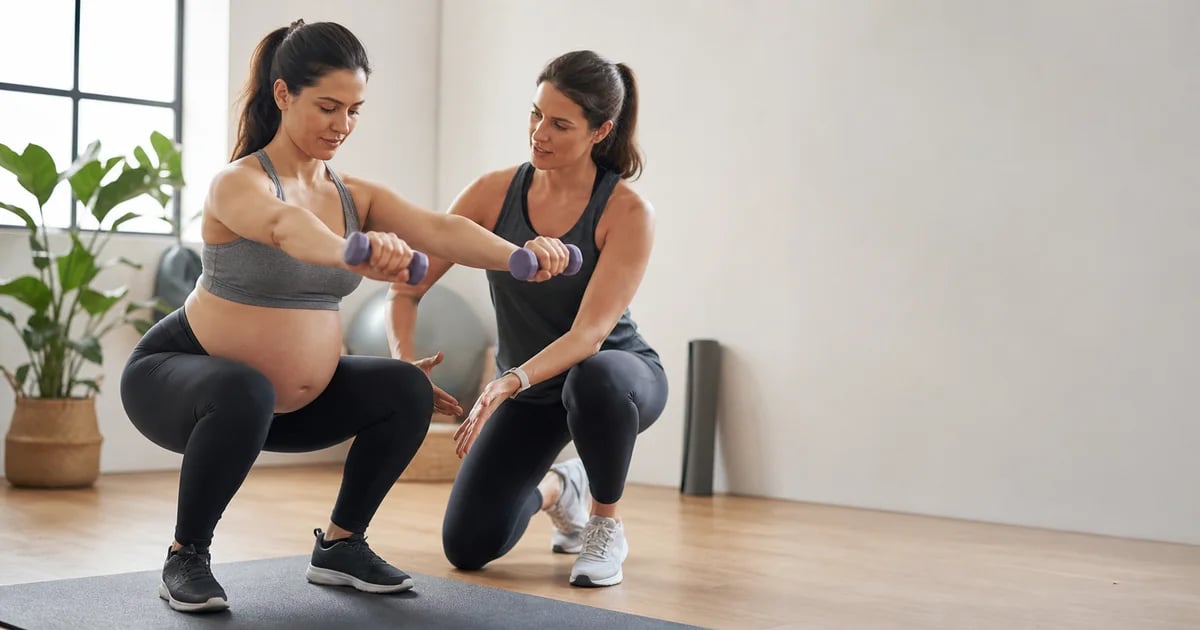
My name is Aida, I'm a personal trainer in Düsseldorf and I also work online with women across our diaspora and region. When a pregnant client messages me, the first question is almost always the same: can I even train, and what is safe? Working with women through pregnancy and after birth taught me the answer needs calm explanation, not fear. This guide gives you a trimester framework, but it does not replace your OB's advice.
Short answer
For most healthy pregnancies without complications, moderate exercise is safe and helpful the whole way through. The goal is not a new record, it is staying strong, mobile and calm. Always get the green light from your doctor first, then adjust the intensity to each trimester.
Why training during pregnancy is worth it
Women often tell me they are scared exercise will hurt the baby, so they sit still for nine months. Regular moderate training usually helps with back pain, energy, sleep and mood, and a stronger body carries pregnancy and birth more easily. What we want is movement that makes you feel strong while you feel safe and in control the whole time.
We are not talking about heavy records here. We are talking about staying active in a way that respects the changes your body is going through.
First trimester: build the habit, not the intensity
If you trained before, you can usually keep a similar rhythm in the first trimester, just without any need to prove yourself. If you are new to this, start slowly with walking, light strength work and breathing drills.
- Listen to nausea and fatigue. A shorter, lighter session is perfectly fine when you feel rough.
- Stay hydrated and cool. Avoid overheating and breathless, exhausting sets.
- Keep your strength. Moderate strength work with good form helps your back later on.
Second trimester: the sweet spot, with a few rules
Many women feel best in the second trimester. Energy comes back, nausea eases and training feels good. We do add a few tweaks as the belly grows.
- Avoid long spells flat on your back. Past mid pregnancy, prefer side lying, seated or semi upright variations.
- Mind your abs. Skip classic crunches and straining planks; we use gentle core stability drills instead.
- Watch your balance. As your center of gravity shifts, choose more stable exercises and support.
This is a phase where we maintain strength rather than push limits. The aim is to feel firm and mobile.
Third trimester: slow down and prepare for birth
In the third trimester weight and fatigue climb, so training gets calmer. The focus shifts to breathing, hips, gentle strengthening and relaxation. Hip opening work and breathing practice pay off for the birth itself.
If a movement starts to feel uncomfortable, that is a signal to swap it, not to grit your teeth. Less is often more here.
What to avoid and when to stop right away
There are clear lines we do not cross. Avoid sports with fall and impact risk, maximal lifts with breath holding, long stretches on your back later in pregnancy and anything that causes pain.
- Stop and call your doctor if you notice bleeding, fluid leaking, strong cramps or belly pain.
- Stop if you feel dizzy, short of breath in a way that does not pass, or a racing heart.
- Slow down if you cannot talk normally while exercising; that means it is too much.
This list is not here to scare you, it is so you have a calm plan if something happens. Your doctor is always the first call.
Pelvic floor and breathing: the part that pays off most
One thing I wish every pregnant woman heard in time is how important breathing and the pelvic floor muscles are. Those muscles carry everything growing above them and play a big role both during birth and in the recovery after. We do not train them by clenching with all our might, we learn to feel them, engage them and, just as importantly, relax them.
In practice this looks like calm breathing drills where on the exhale you gently engage the pelvic floor and core, and on the inhale you let everything go. We do them slowly, with no straining and no breath holding. This is the same foundation we later build the postpartum return to training on, so the time you invest now pays you back many times over afterward.
How I coach pregnant women
When I work with a pregnant client, I always start from what her doctor says and how she feels that day. The plan changes week to week, because the body changes too. I work in person in Düsseldorf and online with women in the diaspora and region, so I can watch your videos and adapt every exercise.
If you are pregnant and want to stay active safely and calmly, with a plan built just for you, see how I work and reach out.
FAQ
- Can I start training during pregnancy if I never did before?
- With your doctor's approval you usually can, but start slow and gentle. Walking, light strength work and breathing drills are a good beginning. Do not try to make up for lost time with intensity, build the habit calmly.
- Which exercises should I avoid in pregnancy?
- Steer clear of sports with fall and impact risk, maximal lifts with breath holding and long spells flat on your back later in pregnancy. Skip classic crunches too. Anything that causes pain is a sign to stop and adjust.
- How do I know I overdid it?
- A good sign is being able to talk normally while you exercise. If you get dizzy, short of breath, feel pain or notice bleeding, stop right away and call your doctor. Fatigue that does not pass means you should slow down.
- Can I train online with you while pregnant?
- Yes, I coach many pregnant women from the diaspora and region fully online. I adapt the plan to your trimester, your symptoms and what your doctor told you, and I review your videos so your form stays safe.