
Shaping Glutes and Legs: Strength Training for Women
How to really shape your glutes and legs with strength training. Hip thrust, progressive overload and a few myths it's time to break.
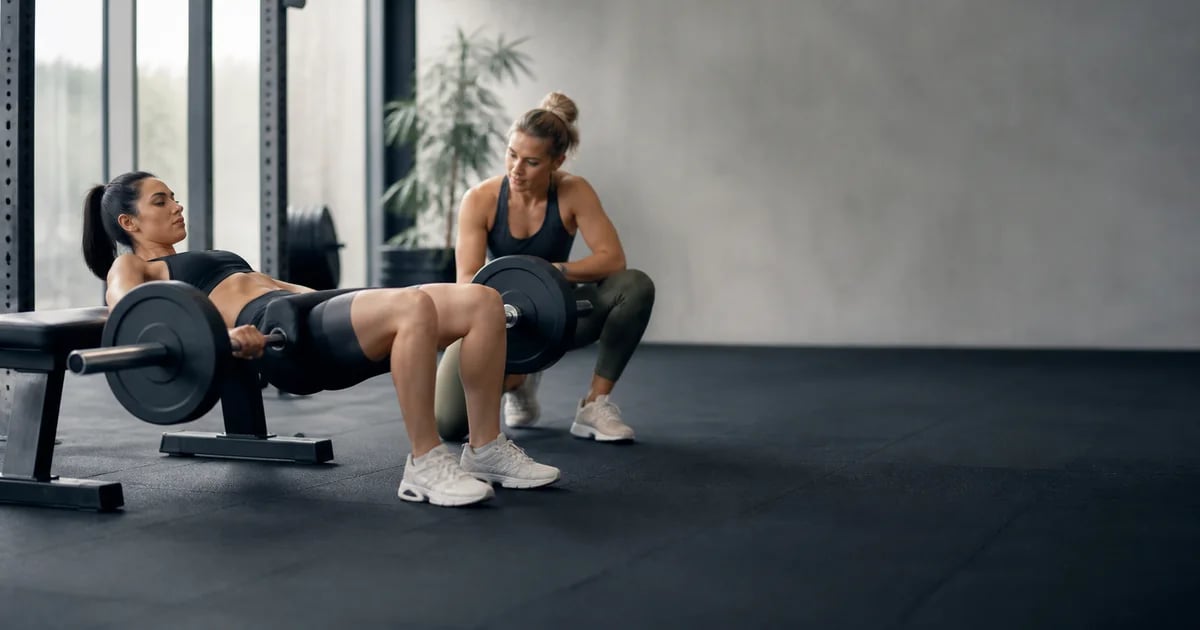
My name is Aida, I'm a personal trainer in Düsseldorf and I work with women in person and online across the diaspora and region. Glutes and legs are probably the number one goal women come to me with. The problem is the internet is full of useless tips, a hundred tiny band drills and promises you can build a butt with no weight. Here I give you an honest plan that actually works.
Short answer
You shape glutes and legs with strength training that gradually gets harder, using a few key lifts like the hip thrust, squat and deadlift. The key is progressive overload, enough protein and patience over months. Light bands and endless bodyweight reps will not take you far.
Why strength training is the answer
For glutes and legs to take shape, the muscle has to grow and get stronger. That happens when you give it a reason, and the reason is a load that keeps increasing. Light little drills are fine as a warm up, but on their own they will not build the muscle you want.
Women often tell me they are scared weights will make them "bulky." That does not happen. Strength training in women gives firmness and shape, not male style mass, because the hormonal picture is different. A stronger body is what shapes your glutes.
The lifts that give the most
You do not need twenty exercises. You need a few good ones that you do well and progress.
- Hip thrust. The best exercise straight for the glutes. It lets you add weight and feel the work exactly where it should be.
- Squat. Builds the whole legs and glutes, the king of lower body lifts.
- Romanian deadlift. Targets the hamstrings and lower glutes, an area most people neglect.
- Lunges and Bulgarian split squats. Single leg work that shapes and balances your legs left and right.
These four lifts, done consistently and with weight added gradually, give more than any band compilation.
Progressive overload: the secret that is not a secret
Progressive overload means over time you work a little harder. You add a kilo, do a rep or two more, or improve your technique and control. Without that, the body has no reason to change your glutes and legs.
That is why I keep a training log. If this week you hip thrust with two kilos more than last week, the body gets a clear signal to build. Muscle grows when you keep challenging it a little, not when you repeat the same thing to exhaustion.
Myths it's time to break
A pile of nonsense circulates around glute and leg training for women. Here are the ones I correct most.
- Weights will make you bulky. They will not. You get firmness and shape, not mass.
- Bands are enough. They are great for activation, but alone they do not build muscle without real load.
- You should train glutes every day. Muscle grows in recovery. Two to three quality sessions a week is enough.
- Cardio shapes the glutes. Cardio burns calories, but strength gives shape. To shape, you need muscle.
How to build the week
For most women two to three lower body sessions a week give excellent results. We combine one glute lift like the hip thrust, one squat variation, one deadlift variation and some single leg work. Add enough protein and enough sleep, because muscle is built in recovery.
The point is not to wreck yourself training every day. The point is that each session is a little better than the last and that you keep it up for months.
The role of nutrition and the most common mistakes
Training is half the story, nutrition is the other half. For the glute and leg muscle to grow, it needs building material, and that is above all enough protein every day. Without it you can train perfectly and still see no result. Alongside protein, watch that you eat enough food overall, because in a big deficit the body struggles to build.
- Too little protein. The most common brake. Without it the muscle has nothing to grow from.
- No progress in weight at all. If you lift the same for months, the body has no reason to change.
- Skipping recovery. Training every day with no rest slows growth, because muscle grows between sessions.
- Quitting too soon. Shape comes over months, so patience really works in your favor.
How I work with clients
When someone comes with the goal of shaping glutes and legs, I first see where she is now, whether there are injuries and how much she can realistically train. Then we build a strength plan with clear progression and track the numbers. I work in person in Düsseldorf and online with women in the diaspora and region, so I can review your videos and fix your hip thrust or squat form.
If you want stronger, more shaped glutes and legs with a plan built just for you, see how I work and reach out.
FAQ
- Will strength training for legs make me bulky?
- No. Strength training in women gives firmness and shape rather than large mass, because the hormonal picture is different than in men. Stronger legs and glutes are exactly what create the shape you are after.
- Are resistance bands enough to shape the glutes?
- Bands are great for activation and warming up, but on their own they do not build muscle. For real shape you need a load that gradually increases, through lifts like the hip thrust, squat and deadlift.
- How often should I train legs and glutes?
- For most women two to three lower body sessions a week give excellent results. Muscle grows in recovery, so there is no need to train every day. Consistency and progression over months matter more.
- How fast will I see results on my glutes?
- You feel the first changes in strength and firmness within a few weeks, and more visible shape usually comes after two to three months of consistent work. With progressive overload and enough protein, progress is gradual but reliable.