
Core Training for Women: Beyond Crunches for a Strong Midsection
Endless crunches won't give you a strong midsection. Here's how I train the core of the women I coach in Dusseldorf, with moves that protect your back and actually work.
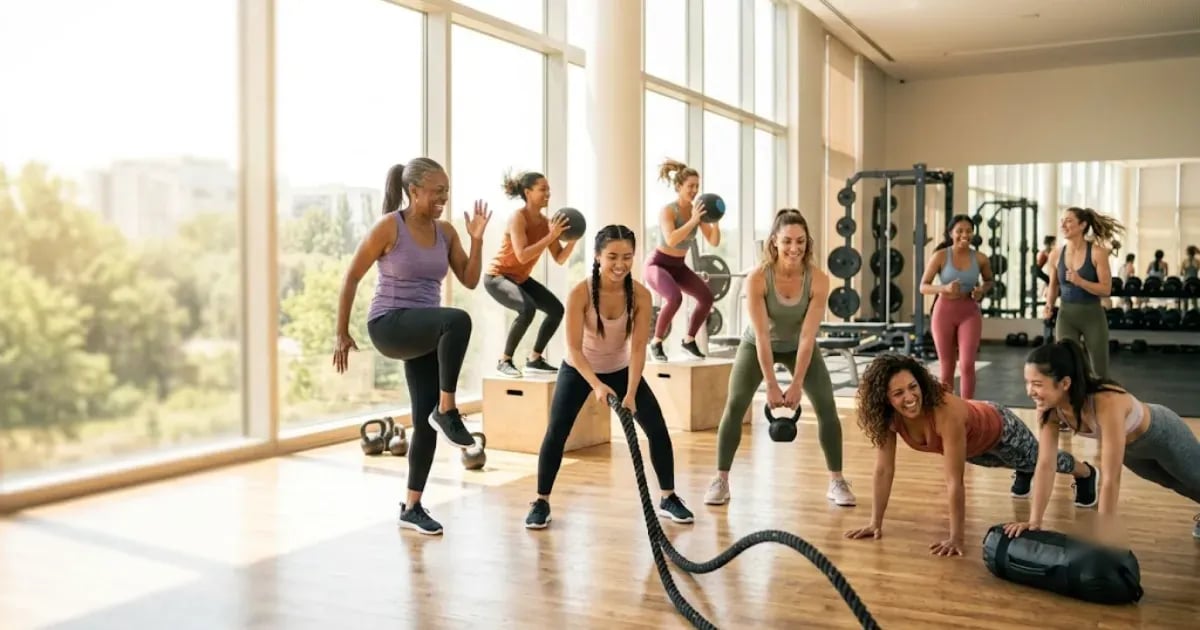
I'm Aida, and I train women here in Dusseldorf. If I had a euro for every time a new client told me she'd been doing a hundred crunches a night and still didn't feel any stronger through her middle, I could open a second studio. Core training is one of the most misunderstood parts of fitness, especially for women. We've been sold the idea that a strong core means endless sit-ups and a visible six-pack. The truth is more useful and a lot more freeing. Let me show you what your core really is, why crunches fail you, and how to train your midsection so it actually works for your life.
What Your Core Really Is
When most people hear "core," they picture the front sheet of ab muscles, the six-pack. But that's only one small part. Your core is the entire muscular corset that wraps around your trunk: the deep abdominal muscles, the obliques on your sides, the muscles along your spine, your pelvic floor underneath, and the diaphragm on top. Together they form a stable cylinder that supports everything you do.
And here's the key insight most crunch routines miss: the core's primary job is not to create movement. It's to resist it. A strong core keeps your spine stable and safe while your arms and legs do the work, whether you're lifting a shopping bag, picking up a toddler, or carrying luggage up the stairs at Dusseldorf Hauptbahnhof. Once you understand that, everything about how you train it changes.
Why Endless Crunches Fail
Crunches aren't evil, but they're a poor foundation for real core strength, and here's why:
- They train one tiny movement. A crunch flexes your spine forward, which is just one of the many things your core needs to do. It ignores stability, rotation control, and everything the deep core does.
- They often hurt your neck and back. Most women end up yanking on their neck and repeatedly rounding their lumbar spine, which is exactly the movement many backs don't tolerate well.
- They won't reveal your abs. You cannot crunch away belly fat. Whether your abs show depends on your overall body fat, and that's decided in the kitchen and through total activity, not by rep count.
So doing hundreds of crunches often gives you a sore neck, a cranky lower back, and very little of the strength and stability you actually wanted.
The Exercises That Actually Work
When I build a core program for the women I coach, I focus on movements that match what the core is truly for: stability, anti-rotation, and control. Here are my go-to categories.
Anti-extension (dead bug). Lie on your back, arms reaching to the ceiling, knees bent at ninety degrees. Slowly lower one arm overhead and the opposite leg toward the floor while keeping your lower back gently pressed down. This teaches your deep core to hold your spine steady, which is exactly its real job, and it's kind to your back.
Planks and plank variations. A proper plank trains your whole core to stay rigid. But I rarely have clients hold one forever. Once you can hold a clean plank for thirty to forty seconds, we make it harder and more useful with side planks, shoulder taps, and moving variations that challenge stability from every angle.
Carries. This is the most underrated core exercise there is. Pick up a heavy dumbbell or kettlebell and simply walk with control, keeping your trunk tall and steady. Loaded carries build a rock-solid, functional midsection and translate directly to real life, from groceries to suitcases.
Anti-rotation work. Movements like the Pallof press, where you resist a band trying to twist you, train your core to control rotation. This protects your spine and builds the kind of strength that shows up in every athletic movement.
Posture, Back Health, and Everyday Strength
Here's what I love most about training the core properly: the benefits show up everywhere, not just in the mirror. A strong, well-coordinated core is the foundation of good posture. It pulls you upright, takes strain off your lower back, and stops that ache that so many women carry from desks, phones, and long days.
Many women come to me wanting a flatter stomach and leave surprised that their back pain quietly faded and they simply stand taller. That's because a stable core does what it was designed to do: it takes load off your spine and distributes it properly. This is functional strength, the kind that makes your whole body feel more capable, not just look a certain way.
A Note for New Mums
If you've recently had a baby, your core deserves special care, and I want to be honest with you here. Pregnancy stretches the abdominal wall and often creates some separation of the muscles down the middle. Jumping straight into crunches or hard planks can make that worse.
In the early postpartum weeks, we start gently: focused breathing that reconnects your deep core and pelvic floor, then slow, controlled movements like modified dead bugs. If you had a difficult delivery, notice a visible doming down your midline, or experience any leaking, please get cleared by your doctor or a pelvic floor physiotherapist before progressing. From there, we rebuild step by step, and I promise you can get a genuinely strong core back. It just takes the right order and a little patience.
Let's Build Your Strong Core Together
A strong midsection isn't about punishing yourself with crunches until your neck aches. It's about training your core to do its real job so you move better, stand taller, and protect your back for life. If you're in Dusseldorf and you're ready to train your core the smart way, with exercises picked for your body and your goals, I'd love to help. Reach out and let's build a midsection that's strong where it counts.
FAQ
- Why aren't crunches enough for a strong core?
- Crunches only train one part of your abs through one small movement, and the core does far more than flex your spine forward. Its main job is to resist movement and keep your trunk stable while your arms and legs work. If all you do is crunch, you build a core that can't do its real job, and you often aggravate your neck and lower back in the process.
- Will core training give me a flat stomach?
- Core training builds and strengthens the muscles underneath, but whether you see them depends mostly on your overall body fat, which comes from nutrition and total activity. You cannot spot-reduce belly fat with core exercises. What core training reliably gives you is a stronger, more stable midsection, better posture, and less back pain, which matters far more than a six-pack.
- How often should I train my core?
- Two to three focused core sessions per week is plenty for most women, and each only needs about ten to fifteen minutes. Your core also works hard during squats, deadlifts, and carries, so it gets trained more than you think. Quality and control matter far more than doing hundreds of reps.
- Is core training safe after having a baby?
- Core training is important after birth, but the starting point matters. In the early weeks I focus on gentle breathing and deep-core reconnection rather than crunches or planks, especially if there's any abdominal separation. If you had a difficult delivery or notice doming or leaking, please get cleared by your doctor or a pelvic floor physio first. Then we rebuild step by step.
- Can a strong core help with back pain?
- Very often, yes. A weak or poorly coordinated core forces your lower back to do work it isn't designed for, which leads to that nagging ache. Training your core to stabilise properly takes that load off your spine. Many women I train in Dusseldorf come for a flatter stomach and are surprised when their back pain quietly disappears.